

Key Takeaways
TL;DR
- A real estate drip campaign is a series of automated emails that goes out on a schedule or after a trigger, so leads and clients hear from you until they are ready to act. The campaigns that work are relevant, short, useful, well timed, mobile-friendly and still sound like you.
- Segment by buyer, seller, search stage and neighborhood so every email feels relevant.
- Keep emails short and skimmable, with one clear next step.
- Build core sequences: welcome, lead nurture, newsletter, buyer and seller education, events and post-closing.
- A strong newsletter mixes market updates, practical tips and local community news.
- Automate the schedule, but write every message in your own voice first.
Nailing a few key drip email marketing flows is a game-changer for busy agents. Done right, real estate drip campaigns nurture leads, build relationships and drive conversions, all while you focus on closing deals. But building email campaigns that deliver results takes more than attaching a market report your broker made and hitting “send.” It’s all about strategy.
So what is a drip campaign in real estate? It’s a series of emails that goes out automatically, on a schedule or after a trigger such as a new lead signing up, a contact getting a tag or a date like a home purchase anniversary. Each email moves the relationship forward a little, so leads and clients keep hearing from you until they’re ready to buy or sell.
In this article, we’ll explore:
- Core principles for successful drip email marketing in real estate
- Common types of real estate email drip campaigns
- How to set up a real estate email drip campaign
- A detailed breakdown of how to create a winning real estate newsletter
Let’s get started!
Jump to What You Need
- 8 Principles for Crafting a Winning Email Drip Campaign
- What to Send: Types of Real Estate Drip Campaigns
- How to Set Up a Real Estate Email Drip Campaign
- Deep Dive: A Winning Real Estate Newsletter
- Don't Worry, You've Got This
- Frequently Asked Questions About Real Estate Drip Campaigns
8 Principles for Crafting a Winning Email Drip Campaign
1. Know Your Audience
Personalization is king, and it’s about a lot more than starting your emails with “Hi [FIRSTNAME]!”, although addressing people by name is the bare minimum. 76% of consumers get frustrated when companies don’t deliver personalized interactions (Source: McKinsey & Company). Don’t let bland, impersonal emails turn your hard-earned leads into unsubscribes.
The key to engaging (instead of annoying) drip email marketing for real estate is making your content as relevant as possible. Segment your database by buyer, seller, home search stage or neighborhood, anything that helps you narrow in on content each group will care about. Create content that answers their real questions, like “How much is my home worth?”, “Where are the best school districts?” or “Which areas are best for a first home?”
2. Keep It Short and Sweet
People have short attention spans. On average, people spend only about 9 seconds reading an email (Source: Litmus). Use punchy headlines and skimmable content to get your message across quickly and encourage clicks.
3. Deliver Value
Provide actionable insights and tips, and don’t bury them deep in your email. For example, share home repair tips, market trends or new listings you can help them see today.
4. Timing Matters
Send the emails in your drip campaign when people are likely to be checking their inbox. The best time differs by audience, so test a few send days and times and watch your open rates. Space emails out, too. A new lead might hear from you a few times in the first two weeks, while a past client might get one email a month.
5. Automate, But Stay Human
Automation is powerful, but generic emails fall flat and can even damage the trust you’ve built. Put your own personality into every message before you set up any drip campaign. When in doubt, don’t send it, and definitely don’t set it to send automatically.
6. Make It Mobile-Friendly
Many of your contacts will open your emails on their phones. Always test the emails in your drip campaigns to make sure every one of them looks great on a small screen.
7. Include Clear CTAs
Too often, email CTAs like “Get started” or “Learn more” leave people wondering what will happen when they click. Whether it’s “Schedule a Free Consultation” or “View New Listings,” always tell readers their next step so they can click with confidence.
8. Test, Track and Tweak
Use A/B testing to fine-tune subject lines, email copy and designs. Then monitor key metrics like open rates, click-through rates and conversions. Any decent email service provider should show basic engagement for every send, and full-featured platforms with real estate drip campaigns can connect those numbers to the contact, so you can see who is engaging.
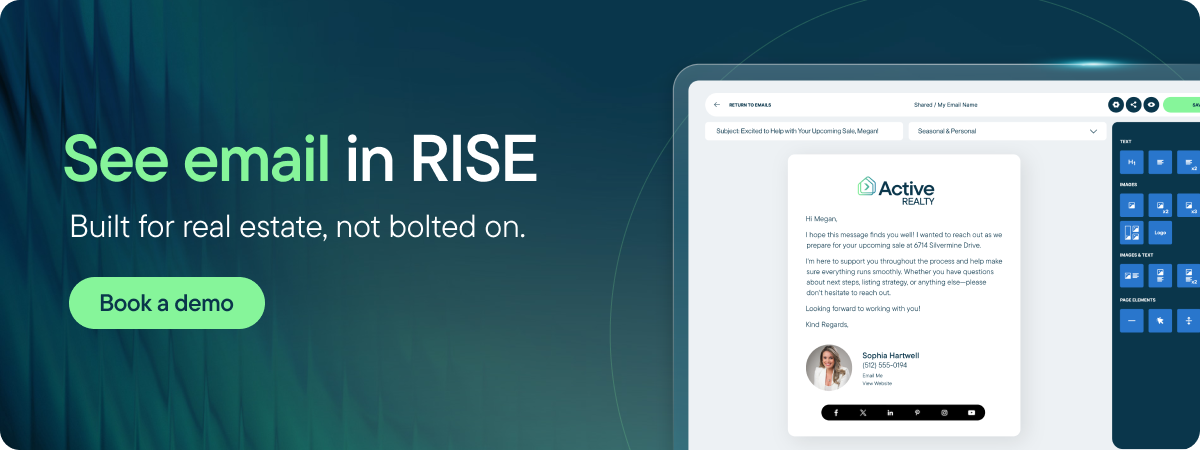
Pro Tip: No time to design emails and build drip campaigns from scratch? RISE by MoxiWorks has prebuilt, real estate-specific campaigns you can switch on, edit or replace with your own. It tracks opens and clicks on every campaign email and records them on the contact, so you can see who is engaging and follow up personally.
What to Send: Types of Real Estate Drip Campaigns
Okay, so now you’ve got the lowdown on creating impactful email content for drip campaigns. But which drip email campaigns for real estate are worth building versus sending one-off? Here are seven real estate drip campaign ideas agents swear by.
Welcome Series
Introduce your brand and set the stage for a lasting connection. A welcome series is especially important for online leads, who may only know you as the person who answered when they clicked “Contact Agent.” Include a personal story, market insights and a “how I can help you” breakdown. Keep it brief and leave enough space between emails so readers don’t feel bombarded. Need copy to start from? Use our real estate email templates.
Lead Nurturing
Few leads are ready to buy or sell on day one. Until they are, win over hesitant buyers and sellers with lead nurturing emails that answer their key questions and concerns.
Newsletter Campaigns
The right time to transact will pass you by if you don’t stay in the loop. Keep leads and clients in the know with regular updates on market trends, tips and local events. We’ll go deeper into the anatomy of a great newsletter below.
Homebuyer Education Series
Buying a home for the first time can be daunting, with lots of new terms and steps. Help first-time buyers get up to speed with neighborhood highlights, listings in their target area and step-by-step guides from preapproval to closing.
Seller Education Series
Teach sellers how to prepare their home for sale to get the most value from it, explain your marketing process and share data that helps them understand the local market.
Event-Based Drips
As a real estate agent, you want your audience to see you as tapped into the local community. Promote open houses, local events or seasonal happenings with timely reminders.
Post-Closing Follow-Up
Stay in touch after the deal to strengthen your relationship over time. Share home maintenance tips, trusted local pros and seasonal ideas for enjoying their home, and celebrate their home purchase anniversary each year. Don’t be shy about asking for referrals and reviews.
How to Set Up a Real Estate Email Drip Campaign
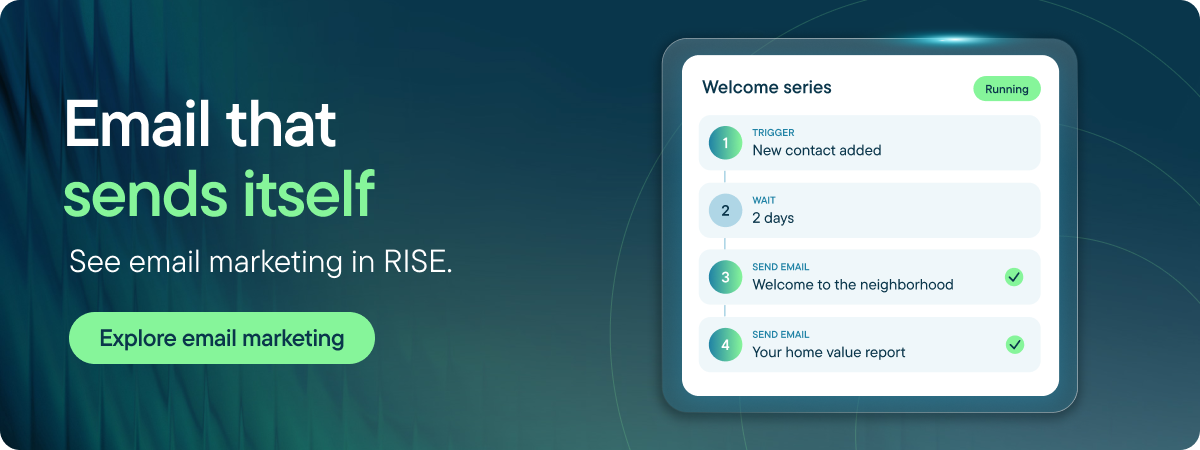
You don’t need a complicated system to get started. Pick one campaign, such as a welcome series, and build from there.
- Choose the goal and audience. Decide who the campaign is for, such as new online leads, first-time buyers or past clients, and what you want them to do next.
- Pick the trigger. A drip campaign can start when a contact is added, when they get a tag, on a set date or when a listing event happens on the MLS.
- Map the sequence. Plan how many emails to send and how far apart. For example, a welcome series might send a hello on day 1, a market update on day 3, matching listings on day 7 and a check-in on day 14.
- Write the emails. Keep each one short, useful and in your voice, with one clear call to action.
- Turn it on and review. Check opens, clicks and replies after a few weeks, then adjust the subject lines, timing or content.
In RISE, campaigns can start on a date, when a contact is added or tagged, or when an MLS listing event happens, such as Just Listed or Just Sold. Campaigns can chain several emails with delays between them, and tags can start sequences like a first-time buyer or homebuyer series. If you’re comparing platforms, see the best real estate email marketing software, and for the bigger picture, read our real estate email marketing best practices.
Deep Dive: A Winning Real Estate Newsletter
Newsletters are a cornerstone of drip email marketing in real estate. They keep you top of mind while delivering useful content. Let’s break down the elements of a really good one.
1. Start With a Strong Subject Line
Your subject line decides whether your email gets opened or ignored. Aim for intrigue and relevance. Give the gist of your email without giving away every detail or making it too long. Example: “Your [Month] Market Update: What Homes Sold for in [Neighborhood].” Skip all caps and stacks of exclamation points, which can also send emails to spam. Our guide to keeping real estate emails out of spam has more.
2. Add Value With the Right Content
Every newsletter should have three main elements:
- Market updates: Share recent trends like median sale prices or days on market. Include visuals like charts for extra impact.
- Tips and tricks: Offer value, like home improvement ideas or seasonal maintenance tips for homeowners.
- Community insights: Spotlight local events, businesses or attractions to build goodwill.
3. Keep It Visual
Use high-quality images and short, engaging text. Canva and other tools make it easy to create visually appealing newsletters.
4. Include Links and CTAs
Drive engagement with clickable links. For example: “See this week’s new listings” or “Schedule a consultation with me today.”
5. Make Sure You Show Up
Don’t make your audience check the sender to figure out who the newsletter is from. Feature your contact information and headshot prominently in your intro or footer to remind them who put the content together, and to convey warm professionalism.
6. Be Consistent
Send your newsletter monthly, without fail. Consistency builds trust, and trust leads to loyalty. Not getting the opens you want? Hear why nobody opens your real estate newsletter and how to fix it.
Don’t Worry, You’ve Got This
Drip email marketing in real estate can transform your business, and while it can seem time-consuming and complicated to set up, it doesn’t have to be. From newsletters to lead nurturing campaigns, it’s all about delivering value, staying consistent and building trust over time. Start with these principles and campaign ideas, and you’ll see results.
Frequently Asked Questions About Real Estate Drip Campaigns
What Is a Drip Campaign in Real Estate?
A real estate drip campaign is a series of emails that goes out automatically, on a schedule or after a trigger such as a new lead signing up, a contact getting a tag or a date like a home purchase anniversary. Each email keeps the relationship moving until the contact is ready to buy or sell.
What Are the Benefits of Email Drip Campaigns for Real Estate Leads?
Drip campaigns keep you in touch with leads who aren’t ready yet, without you writing and sending every email. Done right, they nurture leads, build relationships and drive conversions while you focus on closing deals, and they make sure no one is forgotten when you get busy.
How Do I Set Up a Real Estate Email Drip Campaign?
Choose the goal and audience, pick the trigger, map how many emails to send and how far apart, then write short, useful emails in your own voice with one clear call to action. Turn it on, then check opens, clicks and replies after a few weeks and adjust.
What Are Examples of Effective Real Estate Drip Sequences?
Seven sequences cover most needs: a welcome series, lead nurturing, a monthly newsletter, a homebuyer education series, a seller education series, event-based drips for open houses and local events, and post-closing follow-up. A welcome series might send a hello on day 1, a market update on day 3, matching listings on day 7 and a check-in on day 14.
How Do I Automate Drip Emails and Still Sound Human?
Write every email in your own voice before you automate it, and personalize beyond the first name with content that fits each segment. Keep emails short, include your photo and contact details, and follow up personally with contacts who open and click. When in doubt, don’t set it to send automatically.